2008

Day trip to Shenzhen

Day trip to Shenzhen from Hong Kong. Most nationalities can now get visas at the border (why do us Brits get screwed with such expensive visas?), but be warned, you have to pay for them in RMB. Once you’ve cleared immigration Hong Kong side there is no ATM, so if you’ve got no Chinese money, you are at the mercy of the folk in no-mans land. There’s a counter by the visa office that will change money, but the rate is truly lousy.

Words are slippery things

Want to prove it? Take a sheet of paper. Tear it in half (under the table so I can’t see).  Now show the two halves.  You tore it in half side-ways didn’t you.  I tore it length-ways.  Same instruction, same materials, completely different result.

Where’s the call to action?

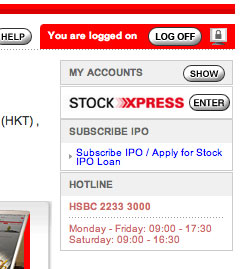
On logging in to your HSBC Hong Kong personal bank account the customer gets a brochureware spashpage promoting HSBC products (why no account summary?).  To access their accounts (the reason the customer has gone to the trouble of logging in) the primary call to action is in a box on the right hand side of the screen.  It’s the <Show> button next to gray-on-gray text “My Accounts”.   The strongest call to action is to the ‘new trading site’ Stock Xpress.  It’s a small point, but a call to action as important as account access should more prominent and be the focal point, not an easily missed button.

A pat on the back

Listening to your customers is not just about understanding how you can improve, it should also be about recognising when you do good. Especially if you are a people business, do you have a mechanism for enabling your customers to thank a member of your staff for outstanding service?

In your IVR do you have an option at the end of the call to let the customer give positive feedback on the representative who handled the call?

How about on your website? Do you have a form like British Airways does to enable a customer to simply “thank a staff member“? And if you do, do you have the process to ensure that the staff member will learn of the feedback, that it will feature in their review process and will be recognised for being what your brand should be all about, delighting your customers?

Some one forgot to ask the critical question…

Some one forgot to ask the critical question,

What is the likely traffic that will hit our site during the offer and will our system be able to handle it?

Dr. Pepper said that they’d give a free Soda to all Americans if Guns’n’Roses released their new album this year. They did and the drinks company held up their promise, setting up a website offering a free coupon for 24 hours (if you signed up). They turned a throw away comment to their advantage and this could have been great PR. Only they didn’t predict the volumes that would hit the site, it couldn’t handle the traffic and went down for most of the day. Cue panic extension of the offer, unhappy customers, unhappy Axel Rose, PR disaster and lawyers on the prowl. If only they’d remembered to think about NFRs.

Why you should care about twitter

Motrin, a US healthcare company put on their home page a large video advert with the basic premise that mothers who carry their babies are likely to get back ache and their pain killers are right for the job. Nothing wrong with that, however the message was ill-judged “Wearing your baby seems to be in fashion…” going on to “supposedly it’s a real bonding experience”. Oh dear. That ‘s the sort of language that stokes the fire of mothers. There once was a time that they would have complained to each other at the NCT meeting (or whatever the US equivalent is), more recently a few might have blogged about it. But there is overhead in setting up a blog, and you need to think about what you write. Not so for Twitter. Twitter is low cost of entry, instant gossip.

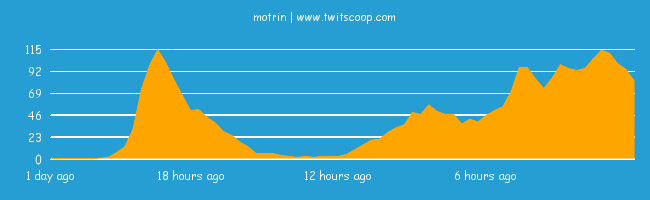
Over the weekend Twitter has been buzzing with mums complaining about Motrin and their ad at #motrinmums. Look at the stats. From nothing to hundreds of negative sentiments in a matter of hours. Over a weekend.

(From Twitscoop)

It will be interesting to see how long before the ad is pulled. Will one person take responsibility, make the right decision (and do the right thing and apologize), or will it be a decision by committee and ultimately hurt the brand?

I started with the title “why you should care about Twitter”. Not so long ago I would talk to people about blogging and its importance to the enterprise and was told it was not relevant to that persons organisation. I’m surprised at how many CxOs I talk with today either don’t know what Twitter is or don’t seem to care. This is a good wake-up call. (Oh, and I picked this story up on Twitter via Jerimiah).

Are you experienced?

“For you who have had the experience, no explanation is necessary. For you who have not, none is possible.”

I’m going to attribute that saying to Ram Dass, a Harvard professor who via psychedelic experiences ended up a spiritual teacher in the Eastern Tradition.

The problem with too much software/web design is that it is produced by people who have just not had the experience, or do not see the experience as relevant to their organisation or domain. They just don’t “get it”.

(“For you who have an apple product, no explanation is necessary, for you who have not, none is possible?” Cue “it’s an enterprise application we’re buiding, not a ****ing iPhone”).

If we want to build memorable and compelling products, we need to focus upon the experience. To dwell on the feature list or functional requirements is to build mediocrity. Nothing wrong with mediocrity if you don’t want to delight your customers or increase the performance of your workforce. Without considering experience you will miss innovation and added value.

So how to focus upon experience? Get your team to undertake different tasks to get under the skin of what customers go through.

Telco product?
Spend time in a retail outlet and watch different customers buy phones
Go into all the phone shops on the high street and ask the rep “hello, I want a mobile phone”. Suspend all your knowledge about phones and tariffs. How do they sell?
Leave your blackberry at home for a day (how dies it feel? How does it change what you do?)
Download instruction manuals from different phones from manufacturers websites

Travel product?
Go into a travel agents and ask for a holiday “somewhere hot and cheap in February”

Credit card product?
Ask to borrow money from someone you don’t know (how does it feel?)
Apply for a credit card at another bank
Collect all the Credit Card / loan direct mail and emails that you and you get sent over a week, photo / scan all the credit card advertisements you see in a week
Go into a car sales room and look to buy a car on credit

Supermarket product?
Get behind the till for a day (In the UK, at least a few years ago, all senior executives in both Tesco and Sainsburys spent time in the stores over the Christmas period)
Ask a shop assistant to help you find an obscure product that is not in stock
Go into a store with a shopping list and a single bank note, (no credit cards)
Go to the pharmacy when it is busy and ask to buy the morning after pill

Extend your team
Bring in representatives from completely unrelated parts of the business to participate in brainstorming sessions. Building a “youth” social networking website? Get someone from legal or corporate finance to join in. (Get’s you thinking along the lines of extreme characters – here and here [pdf]). Working on a complex exotic financial instruments? Get a few PAs to join in. You may learn something (that your product is too complicated and even you can’t explain what it really is).

I’m sure you can come up with better exercises. The object is that with this collection of experiences and related emotions new ideas can be brought to the table. They can offer insights from another, different perspective, providing more chance of business innovation being realised. More importantly, if you have an emotional attachment to the product you are building through real experience, you are more likely to build a better product that will fullfil the needs of and goals of the target audience in the way they want. The day your enterprise application team all have iPhones will be the day you start building better enterprise applications. For them, no explanation will be necessary. They’ll just “get it”.
Customer or Client?

One of the things that bugs me in IT development is that the business is too often referred to as “the customer”.  “Customer” implies a transactional relationship.  A customer purchases from a seller; there is little incentive for any meaningful relationship as it will ultimately come down to price.  The buyer wants to pay as little as possible, the seller wants to charge as much as possible.

All to often IT is seen as a cost centre rather than a driver of business innovation and profit.  Maintaining the transactional language to describe the relationship between IT and the business helps perpetuate this.  We need to stop thinking of the Business as our customer.  Instead of “customer” we should look to other professional services for our metaphor.

Professions that involve a more personal, relationship driven approach to their business use “client” rather than “customer”.  Whilst retail banking has customers, wealth management talks about clients.  I think it is a subtle but important difference.   The relationship between IT and the business should not be seen as transactional, it is more consultative in its approach.  Structuring our relationship as consultant-client is a small but important first step to redressing the perception of IT as a commodity.

A new page

This blog was getting tired in its design so I’ve given it an overhaul, including introducing some widgets.  (What an awesome piece of software WordPress is).  I’ve also added a new page with a bunch of published papers.  some classics in there (if I do say so myself) such as “Heat stress in night clubs” and “Occupational disorders in Ghanaian Subsistence farmers” !!.  The rest of the dancingmango site was not built using wordpress, so to update it all in one go would be time consuming and of little value.  OK, so there is inconsistency across the site and as a UI guy that hurts, but it is one of the trade-offs that needs to be made.

Innovation and funding in lean times

It’s budgeting time with many organisations putting together their budets for 2009. In the current climate IT is an easy target for cutting costs. Stories such as “no new non-core projects till 2010” and “no project that can’t demonstrate a postive ROI in 12 months” are abound. There is a risk that only focusing upon projects that keep the lights on will do longer term damage to the company. Seth Godin writes:

Wealth is created by productivity. Productive communities generate more of value.
Productivity comes from innovation.
Innovation comes from investment and change.

Annual budgeting cycles combined with inflexible development approaches preclude real innovation. It is hard to justify any cost, especially untested products that brings a burden of risk to the organisation.

There are two solutions that go hand in hand. Agile software development enables IT to release value from production earlier and more often than waterfall development. Rather than significant sunk cost in risky product innovation, it removes waste from the process and focuses upon delivery of working software that is of value to the business, taking the product to market at the earliest possible time.

This is a challenge to the annual budgeting charade where line item projects compete for guessed amounts in return for notional value. (IT put crude guesses – not even estimates- against even cruder descriptions of required features from the business). A better model would be to take that of the venture capitalist, with different rounds of funding. Rather than allocating specific funds to specific projects, far better to ring fence budget for ‘product innovation’. Within this pool of cash projects compete with each other with a pitch for seed funding. Those that are successful go straight into agile development with sufficient funding for a first release (say three to four months). Getting to production (and to market- internal or external) will validate further funding or equally enable the business to make an informed decision and kill the idea – fail fast, fast cheap.

1 of 6
123456